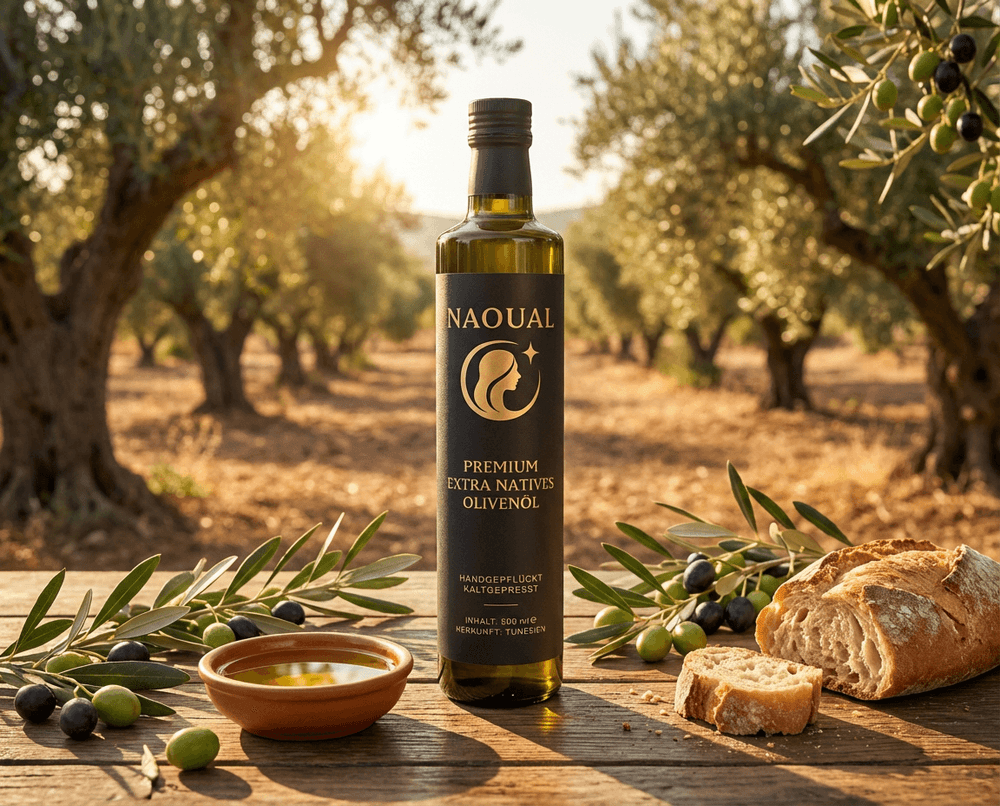
When you hear "Mediterranean Diet," what comes to mind? While our northern neighbors often get the spotlight, the true heart of the Mediterranean lifestyle beats just as strongly on the southern shores.
When you hear "Mediterranean Diet," what comes to mind? Pasta in Rome? Greek salads in Santorini?
While our northern neighbors often get the spotlight, the true heart of the Mediterranean lifestyle beats just as strongly on the southern shores. In fact, Tunisia is one of the founding pillars of this world-renowned way of eating—a lifestyle that has been celebrated by UNESCO as an Intangible Cultural Heritage of Humanity.
For us, this isn't a "diet." It isn't a trend we follow to lose weight. It is simply life.
Here is why the secret to the world's healthiest diet might actually be hidden in North Africa, and how NAOUAL brings this ancient wisdom to your home.
1. The Foundation: "Zit Zitoun" (Olive Oil)
In Italy, butter sometimes makes an appearance. In France, cream is king. But in Tunisia, Extra Virgin Olive Oil is the undisputed sovereign of the kitchen.
It is used in everything.
- Breakfast: We dip fresh bread into oil and honey.
- Lunch: We drizzle it raw over Kosksi (Couscous) to finish the dish.
- Dinner: We use it to preserve tuna, peppers, and artichokes.
Because we consume it in such high quantities, the quality matters immensely. This is why NAOUAL is critical—it's not just a cooking fat; it is our primary source of daily energy and protection against disease.
2. The Power of "Harissa" & Spices
The Tunisian variation of the Mediterranean diet has a secret weapon: Heat.
While Mediterranean food is generally healthy, Tunisian food adds a layer of metabolism-boosting spices.
- Harissa: Our famous chili paste is packed with capsaicin (good for the heart) and garlic.
- Turmeric & Cumin: Anti-inflammatory spices used daily.
- The Perfect Pairing: When you mix spicy Harissa with the smooth, fruitiness of NAOUAL Extra Virgin Olive Oil, you create a nutrient-dense "super-sauce" that makes vegetables addictive.
3. Couscous: The Original Ancient Grain
Before quinoa became trendy, there was Couscous.
Tunisian couscous (often steamed over a simmering broth of vegetables and fish) is the ultimate whole-food meal. Unlike heavy cream sauces or processed carbs, a Tunisian couscous platter is balanced:
- Base: Semolina grain (energy).
- Topping: A mountain of seasonal vegetables (pumpkin, carrots, chickpeas).
- Protein: Fresh seafood from the Mediterranean coast or lean lamb.
- The Finish: A final, generous pour of raw olive oil before serving.
4. Seasonality is Religion
In Tunisia, we don't eat strawberries in winter. We eat what the land gives us, when it gives it.
This "farm-to-table" approach wasn't a marketing strategy; it was survival.
- In winter, we eat hearty root vegetables and citrus.
- In summer, we eat peppers, tomatoes, and stone fruits.
NAOUAL honors this rhythm. Our oil is a vintage product—harvested once a year, bottled fresh, and consumed with the seasons. It captures the specific rainfall and sunshine of that specific year.
5. The "Shared Plate" Philosophy
Finally, the healthiest part of the Tunisian diet isn't an ingredient. It's a habit.
We rarely eat alone. Food is served on large, communal platters. We gather, we talk, we share bread. This social connection reduces stress and improves digestion.
Bring the Tunisian Table Home
You don't need a plane ticket to experience this lifestyle. You just need the right foundation.
NAOUAL is your starting point. It is the authentic thread that ties these ingredients together.
- Drizzle it over your hummus.
- Pour it over your steamed vegetables.
- Dip your best bread into it.
Stop "dieting" and start living. Welcome to the Tunisian table.