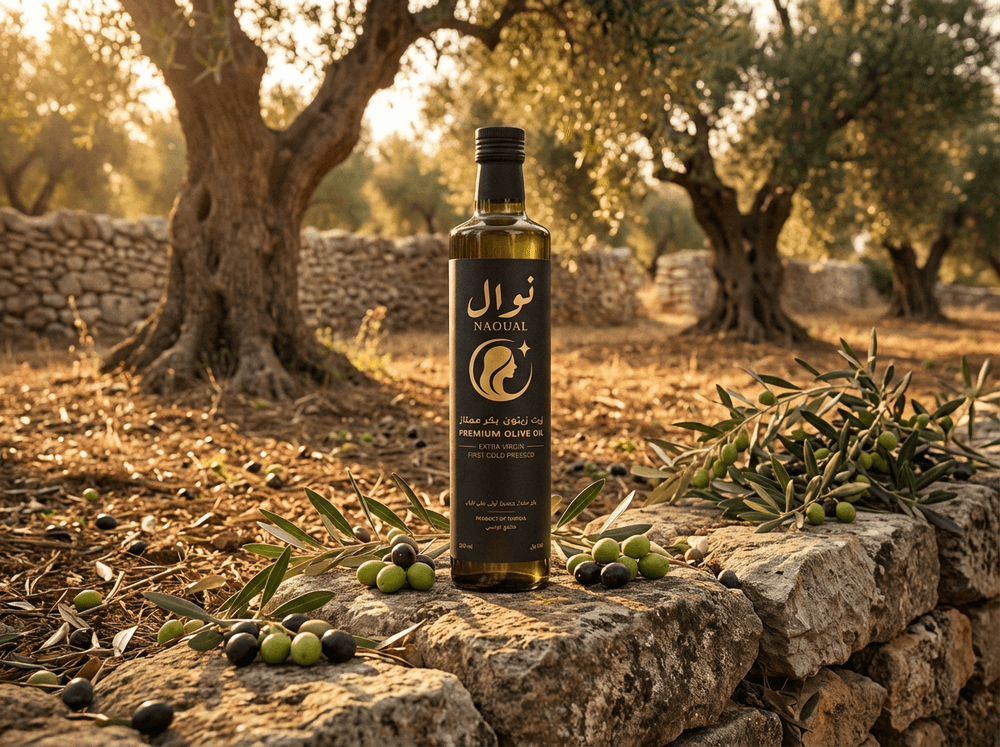
Tunisian olive oil is more than just a commodity; it is a story written in the soil over thousands of years. From the Phoenicians to the modern day, the history of this land is defined by the olive.
Tunisian olive oil is more than just a commodity; it is a story written in the soil over thousands of years.
The olive tree has been cultivated in Tunisia for millennia, its roots intertwining with the rise and fall of great civilizations. From the Phoenicians to the modern day, the history of this land is defined by the olive.
Here is how a 2,500-year-old tradition shapes the quality of the oil we enjoy today.
1. Roots of Civilization: Carthage and Rome
Historical evidence suggests the Phoenicians introduced olive cultivation to Tunisia around 500 BC. As the great city of Carthage flourished, so did the olive groves that surrounded it.
Later, the Romans expanded this legacy, turning Tunisia into the "granary" and oil press of the empire. They improved irrigation and pressing techniques that are still studied today.
A Living Link: Tunisia is home to some of the oldest olive trees in the world. On the Cap Bon peninsula, a venerable tree estimated to be 2,500 years old still stands—a living witness to ancient times.
2. More Than Food: A Cultural Pillar
Throughout history, olive oil wasn't just for eating. It fueled lamps, cured ailments, and was used in religious rituals.
Today, this connection remains vital. The olive tree is the heartbeat of rural communities, employing nearly one-fifth of the country's agricultural workforce.
- The Harvest Songs: In many villages, the harvest is a communal celebration. Families gather to hand-pick olives just as their ancestors did, often singing traditional songs that have been passed down for generations.
- Zit Zitoun: Locally known as zit zitoun, fresh, unrefined oil is a symbol of hospitality. It is the foundation of Tunisian cuisine, drizzled over mechouia, mixed into couscous, and shared with pride.
3. Ancient Wisdom, Modern Quality
What makes Tunisian oil unique is the marriage of this storied heritage with modern precision.
Ancient trees, with their deep root systems, sit alongside modern high-density orchards. Farmers still rely on traditional know-how—judging the harvest moment by the fruit's color and feel—while utilizing modern quality controls to ensure low acidity.
When you taste Tunisian oil, you are tasting a blend of old-world wisdom and contemporary excellence.
Preserving the Legacy: NAOUAL
This living history is the soul of NAOUAL.
We see ourselves not just as producers, but as custodians of this heritage. By maintaining the tradition of hand-harvesting and working with local women who hold generations of knowledge, we ensure that the "sincerity of work" remains in every drop.
NAOUAL is a tribute to the land and its people—a single-origin oil that carries the weight of history and the lightness of fresh, pure flavor.
Taste the history of Tunisia.