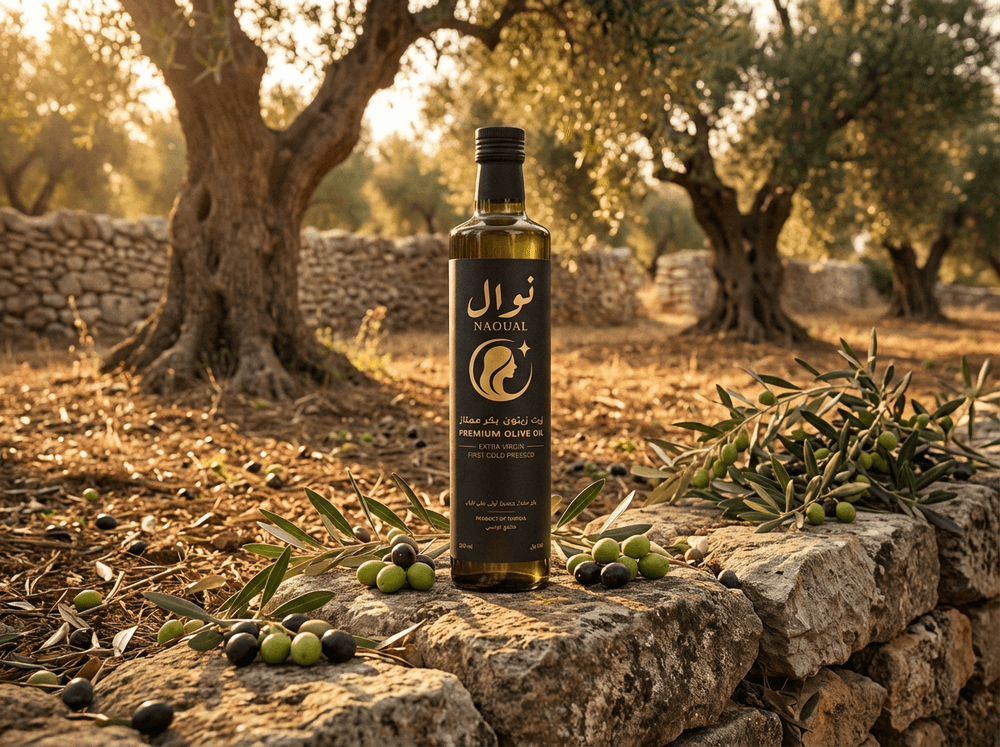
Have you ever wondered how the fruit on a tree becomes the golden-green elixir in your kitchen? In Tunisia, olive oil production is a unique blend of ancient tradition and modern science.
Have you ever wondered how the fruit on a tree becomes the golden-green elixir in your kitchen?
In Tunisia, olive oil production is a unique blend of ancient tradition and modern science. It is a process where speed, temperature, and "sincerity of work" determine everything.
Let's walk through the journey from the soil of Tunisia to your table.
1. Harvesting: The Human Touch
The process begins in the grove. In Tunisia, the harvest typically runs from mid-November through January, when the olives are at their peak ripeness.
Unlike mass-produced industrial oils that use heavy machinery to shake trees (often bruising the fruit), premium Tunisian producers rely on hand-picking.
- Why it matters: Hand-picking protects the olive skin. If the skin breaks before the mill, fermentation starts immediately, ruining the flavor and increasing acidity.
- The Canopy Technique: You might notice Tunisian trees are pruned into an open, umbrella-like shape. This traditional technique ensures sunlight reaches every branch, creating consistent ripening and higher nutrient density in the fruit.
2. Cold Pressing: The Race Against Time
Once harvested, the clock starts ticking. The best oils are pressed within 24 hours of leaving the tree.
At the mill, the olives are washed and crushed into a paste. This is where the term "First Cold Pressed" becomes critical.
- Temperature Control: To be certified "Cold Pressed," the olive paste must be mixed (malaxed) and pressed at temperatures strictly below 27°C (80°F).
- Mechanical Means Only: No chemicals. No heat. Just pressure.
- The Result: High heat extracts more oil but destroys the delicate aromas and healthy antioxidants. By keeping it cold, we sacrifice quantity for quality, preserving the natural "green" flavor and health benefits.
3. Quality Control & Storage
Fresh olive oil is like fresh fruit juice—it is fragile.
Before bottling, the oil undergoes rigorous testing. It is stored in food-grade stainless steel tanks, often shielded by inert gas (like nitrogen) to prevent oxygen from touching the oil.
- The Lab Test: The oil is analyzed for acidity. To be labeled "Extra Virgin," it must have an acidity level below 0.8%.
- The Taste Test: Experts taste the oil to ensure it has no defects and possesses the fruity, bitter, and pungent notes characteristic of high-quality EVOO.
4. Bottling: Locking in the Freshness
The final step is protection. Light is the enemy of olive oil, which is why premium brands use dark glass or opaque tins. This preserves the chlorophyll and antioxidants all the way to your kitchen.
Experience the Journey with NAOUAL
This "tree-to-table" dedication is exactly what defines NAOUAL.
We oversee every step of this process in the heart of Skhira. From the women who hand-pick our harvest to the rigorous cold-pressing standards we maintain, our goal is simple: to bottle the pure, unadulterated taste of the Tunisian sun.
When you open a bottle of NAOUAL, you are tasting a product that has been handled with care from the very first moment.
Taste the difference of a true Single Origin.